Introduction
Imagine a student who never gets tired, never misses a class, never forgets an assignment, and is available twenty-four hours a day.
A few years ago, that idea would have sounded impossible.
Today, that student exists—not as a person, but as artificial intelligence.
Across classrooms, colleges, and online learning platforms, AI is quietly changing the way education works. It is helping students learn faster, assisting teachers with repetitive tasks, and making education more personalized than ever before.
The most interesting part is that many students are already using AI every day without realizing how deeply it has become integrated into modern learning.
Education is no longer limited to textbooks, classrooms, and fixed schedules. Artificial intelligence is creating a learning environment that adapts to individual needs, learning styles, and goals.
A Classroom That Understands Every Student
For decades, teachers faced a difficult challenge.
A single classroom might contain students who learn at completely different speeds.
Some students understand a concept immediately, while others need additional explanations and practice.
Traditional education often treats everyone the same.
Artificial intelligence changes that model.
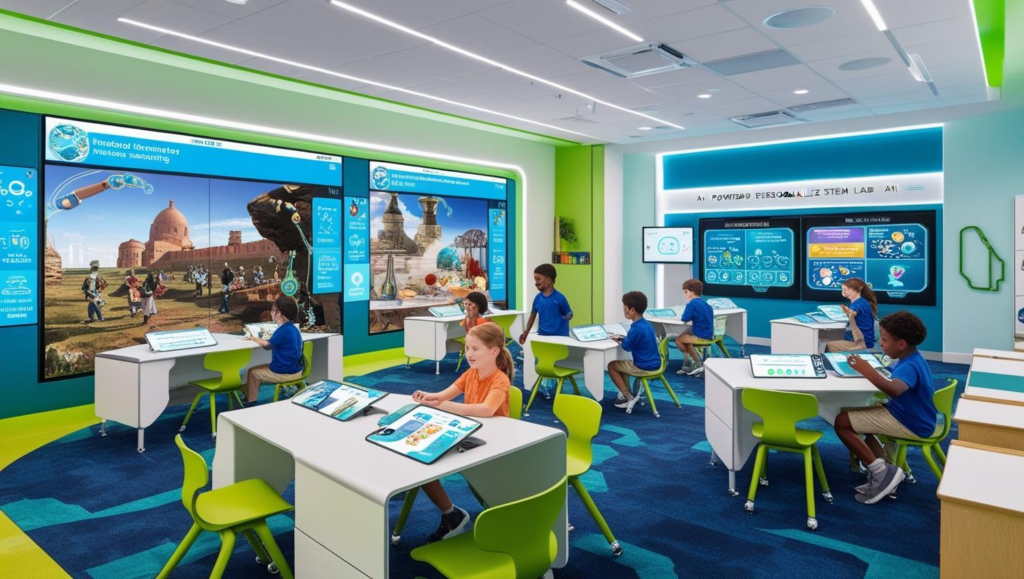
AI-powered learning systems can analyze how a student learns and adjust lessons accordingly.
If a student struggles with mathematics, the platform can provide extra exercises.
If another student masters a topic quickly, the system can introduce more advanced material.
This creates a personalized learning experience that was difficult to achieve in traditional classrooms.
How AI Is Being Used in Education
| AI Application | Purpose |
|---|---|
| Smart Tutoring Systems | Provide personalized guidance |
| Automated Grading | Reduce teacher workload |
| Language Learning Tools | Improve communication skills |
| Virtual Classrooms | Support remote learning |
| Learning Analytics | Track student performance |
| AI Chatbots | Answer student questions |
| Content Generation | Create study materials |
These technologies are helping educational institutions improve efficiency while supporting student success.
The Rise of the AI Tutor
One of the biggest advantages of AI is accessibility.
A human tutor may only be available during certain hours.
An AI tutor can assist students at any time.
Whether a student is studying late at night or preparing for an exam early in the morning, AI tools can provide explanations, examples, and practice questions instantly.
For many learners, this constant availability has become one of the most valuable benefits of artificial intelligence.
Helping Teachers Focus on Teaching
Contrary to popular belief, AI is not designed to replace teachers.
Instead, it helps teachers spend less time on administrative work and more time supporting students.
Tasks AI Can Automate
- Attendance tracking
- Assignment grading
- Progress reports
- Data analysis
- Scheduling support
- Routine student inquiries
By reducing repetitive work, teachers can focus on creativity, mentorship, and classroom engagement.
Breaking Language Barriers
Language has traditionally been a major obstacle in education.
Students often struggle when learning materials are available only in a language they do not fully understand.
Modern AI tools can:
- Translate educational content
- Generate subtitles
- Improve pronunciation
- Support multilingual communication
- Provide real-time language assistance
As a result, educational opportunities are becoming more accessible to students around the world.
AI and Online Learning
The growth of online education has accelerated the adoption of artificial intelligence.
Digital learning platforms use AI to:
- Recommend courses
- Track progress
- Identify weaknesses
- Suggest learning paths
- Improve engagement
Instead of following a one-size-fits-all approach, students receive recommendations tailored to their individual needs.
This makes online learning more effective and efficient.

The Benefits of AI in Education
| Benefit | Impact |
|---|---|
| Personalized Learning | Matches individual learning styles |
| Faster Feedback | Immediate evaluation and corrections |
| Better Accessibility | Learning anytime, anywhere |
| Increased Efficiency | Saves time for teachers and students |
| Improved Engagement | Interactive learning experiences |
| Data-Driven Insights | Better educational decisions |
These advantages explain why educational institutions are investing heavily in AI-powered solutions.
Challenges and Concerns
Despite its benefits, artificial intelligence also raises important questions.
Major Concerns
| Challenge | Description |
|---|---|
| Data Privacy | Protection of student information |
| Overdependence | Excessive reliance on technology |
| Academic Integrity | Misuse of AI-generated work |
| Digital Divide | Unequal access to technology |
| Bias in Algorithms | Potential unfair outcomes |
Educational institutions must address these challenges carefully while adopting new technologies.
Will AI Replace Teachers?
This is one of the most common questions surrounding AI in education.
The answer is likely no.
Teachers provide emotional support, mentorship, creativity, and human understanding that technology cannot fully replicate.
AI can deliver information.
Teachers inspire students.
The future of education is expected to involve collaboration between educators and intelligent systems rather than competition between them.
The Future Classroom
Imagine entering a classroom where every lesson adapts to your skill level.
Assignments adjust automatically based on performance.
Virtual reality allows students to explore ancient civilizations or travel through the solar system.
AI systems identify learning difficulties before they become major problems.
This vision is becoming increasingly realistic.
The classroom of the future may look very different from today’s classrooms, but its goal will remain the same: helping students learn and succeed.
Conclusion
Artificial intelligence is transforming education in ways that were unimaginable just a decade ago. From personalized tutoring and automated grading to language support and intelligent learning platforms, AI is helping create a more flexible and accessible educational environment.
While challenges such as privacy, ethics, and academic integrity remain important, the potential benefits are significant. Rather than replacing teachers, AI is becoming a powerful tool that supports both educators and students.
As technology continues to evolve, the relationship between education and artificial intelligence will become even more important. The schools and universities that successfully combine human expertise with intelligent technology may define the future of learning for generations to come.
FAQs
What is AI in education?
AI in education refers to the use of artificial intelligence technologies to improve teaching, learning, assessment, and educational management.
How does AI help students?
AI helps students through personalized learning, instant feedback, smart tutoring, and improved access to educational resources.
Can AI replace teachers?
No. AI can assist teachers but cannot replace the human interaction, creativity, and emotional support that educators provide.
What are the disadvantages of AI in education?
Potential disadvantages include privacy concerns, technology dependence, algorithm bias, and unequal access to digital resources.
What is the future of AI in education?
The future includes personalized learning experiences, intelligent tutoring systems, virtual classrooms, and more data-driven educational strategies.